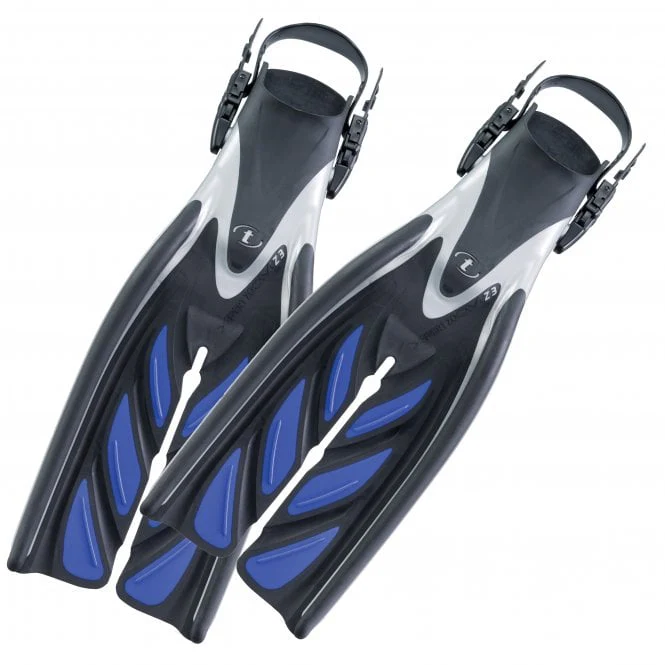
TUSA X-Pert Z-3 Zoom Fins 7-10 UK ML
SIZE M/ML - 7-10 UK WHEN USED WITH HARDSOLED WET OR DRYSUIT BOOT
*NOT SUITABLE FOR BAREFOOT USE*
Over 5 years of research and development brought the highly regarded and best-selling SF-8 X-Pert Zoom split fin to market in 2003.
The SF-15 further improves upon the performance, features and design of the SF-8 with the incorporation of 3 materials, 10% longer blade length, enhanced propeller-fin technology, reinforced blade rails and optimized blade scoops.
TUSA's Angled Blade Design:
When using the standard traditional blade fin, with the leg completely extended, there remains an angle of 27 degrees between the heel and the foot and the calf of the leg, causing a 10% loss of propulsion.
The robot is able to mimic the motion of a human exactly and relay accurate data. TUSA has been able to analyze the performance of the fins under several conditions.
The robot is able to simulate swimming through the water using kick variations, such as a large scissor kick with a slow repetition and vice versa. Using the latest technology, this robot measures the energy expended during the kick and the propulsive force that is created using that energy.
To achieve maximum performance from this fin, use a small bent-knee kick with a light rhythm. This creates less strain on the leg muscles compared with traditional fins, reducing the diver's fatigue and subsequent air consumption.
Features:
Original: $146.96
-70%$146.96
$44.09TUSA X-Pert Z-3 Zoom Fins 7-10 UK ML
SIZE M/ML - 7-10 UK WHEN USED WITH HARDSOLED WET OR DRYSUIT BOOT
*NOT SUITABLE FOR BAREFOOT USE*
Over 5 years of research and development brought the highly regarded and best-selling SF-8 X-Pert Zoom split fin to market in 2003.
The SF-15 further improves upon the performance, features and design of the SF-8 with the incorporation of 3 materials, 10% longer blade length, enhanced propeller-fin technology, reinforced blade rails and optimized blade scoops.
TUSA's Angled Blade Design:
When using the standard traditional blade fin, with the leg completely extended, there remains an angle of 27 degrees between the heel and the foot and the calf of the leg, causing a 10% loss of propulsion.
The robot is able to mimic the motion of a human exactly and relay accurate data. TUSA has been able to analyze the performance of the fins under several conditions.
The robot is able to simulate swimming through the water using kick variations, such as a large scissor kick with a slow repetition and vice versa. Using the latest technology, this robot measures the energy expended during the kick and the propulsive force that is created using that energy.
To achieve maximum performance from this fin, use a small bent-knee kick with a light rhythm. This creates less strain on the leg muscles compared with traditional fins, reducing the diver's fatigue and subsequent air consumption.
Features:
Product Information
Product Information
Shipping & Returns
Shipping & Returns
Description
SIZE M/ML - 7-10 UK WHEN USED WITH HARDSOLED WET OR DRYSUIT BOOT
*NOT SUITABLE FOR BAREFOOT USE*
Over 5 years of research and development brought the highly regarded and best-selling SF-8 X-Pert Zoom split fin to market in 2003.
The SF-15 further improves upon the performance, features and design of the SF-8 with the incorporation of 3 materials, 10% longer blade length, enhanced propeller-fin technology, reinforced blade rails and optimized blade scoops.
TUSA's Angled Blade Design:
When using the standard traditional blade fin, with the leg completely extended, there remains an angle of 27 degrees between the heel and the foot and the calf of the leg, causing a 10% loss of propulsion.
The robot is able to mimic the motion of a human exactly and relay accurate data. TUSA has been able to analyze the performance of the fins under several conditions.
The robot is able to simulate swimming through the water using kick variations, such as a large scissor kick with a slow repetition and vice versa. Using the latest technology, this robot measures the energy expended during the kick and the propulsive force that is created using that energy.
To achieve maximum performance from this fin, use a small bent-knee kick with a light rhythm. This creates less strain on the leg muscles compared with traditional fins, reducing the diver's fatigue and subsequent air consumption.
Features: